Armelle Bondonga Bradshaw Was Detained by ICE. This Is Her Story.

When ICE detained Armelle Bondonga Bradshaw, I knew I wanted to help tell her story. ICE has detained thousands of asylum-seekers in the United States, and every single one of them deserves the opportunity to have their story told. But many are understandably afraid to speak out. Through her lawyers, Armelle has made it clear that she wants her experience to help others. She does not want what she is going through to be in vain.

Well known and deeply loved by her community, Armelle has been a community leader since she was in high school. That has allowed me, even while she remains detained, to talk with the people who know her best. Through their stories, I hope readers can see Armelle not simply as an immigration case, but as a wife, mother, teacher, mentor, friend and community leader whose life has touched many others.

These are the columns I’ve written so far as a result. I will continue to tell Armelle’s story as her case unfolds, and I look forward to the day I get to write about her return home to her family. If you’re looking for ways to support Armelle and her family, visit Bring Armelle Home for the latest information about her case and ways to help.


America Raised Armelle Bondonga. Now It Is Trying to Reject Her.

Published August 28, 2026

On Aug. 12, Armelle and her husband, Terrance Bradshaw, voluntarily appeared for what was supposed to be a final interview in the process of obtaining her marriage-based green card. Instead, ICE agents separated the family and took Armelle into custody.

Armelle did exactly what Americans who favor stricter ICE enforcement say immigrants should do: She followed the law. She showed up, followed the process and did the paperwork. Now she is detained.

Read how Armelle came to the United States and why her family stayed. Read more…


She Followed America’s Immigration Process. ICE Took Her Anyway.

Published September 4, 2026

Armelle Bondonga Bradshaw was nervous walking into her final green card interview, but her husband Terrance assured her that it was all going to be fine. They had done everything the U.S. government had asked of them. ICE detained her anyway.

Read the details of what happened to Armelle that day when she and her husband Terrance went to their immigration interview. Read More…


When ICE Detains Our Immigrant Neighbors, Our Communities Lose.

Published September 11, 2026

When ICE detains immigrants and asylum-seekers disappear, it doesn’t only affect immigrant families. It’s naive to think we don’t lose anything collectively when we remove people from our communities. If immigration doesn’t touch your family directly, I challenge you to look around.

We talk about immigrants as though they are people on the other side of some political argument. But they’re not. They’re a vital part of our daily lives.

Take a step back and look at the bigger picture. How do immigrants affect our communities? This column has it by the numbers. Read More…


His Student Was Detained by ICE. Now He’s Fighting To Bring Her Home.

Published October 2, 2026
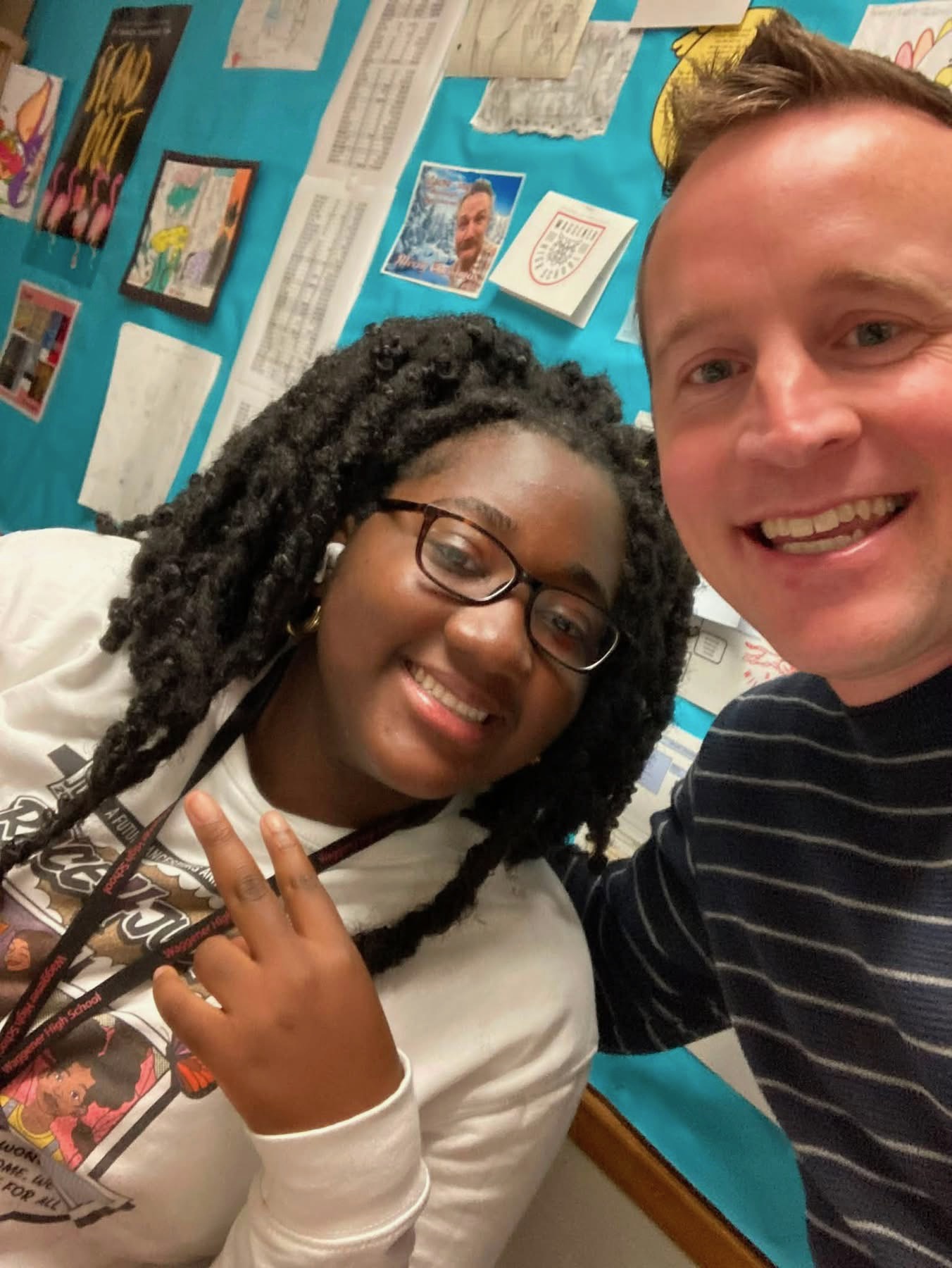
“I’m being taken, please fight for me.”

This is the text that came through on Ryan Davis’ phone on Aug. 12 from his former student Armelle Bondonga Bradshaw.

Ryan got to watch Armelle grow from a student in his classroom into a leader he could work alongside. To have all of that taken away is, in his words, “devastating.”

So Ryan is fighting for Armelle, just like he told her he would.

He has spoken out at press conferences and on social media. He has helped raise money for her legal fees and he brings donations from the community to Armelle’s husband and child. He has helped lead letter-writing campaigns and circulate petitions to put pressure on elected officials and keep Armelle’s story fresh in their minds.

These columns about ICE detaining Armelle Bondonga publish in newspapers across the United States. From Maui to Virginia, Americans have read Armelle’s story. Read More…


Want to help Armelle?

If you’re looking for ways to support Armelle and her family, visit Bring Armelle Home for information about her case and ways to help.

Armelle’s story is still unfolding, and I’ll keep following it.

I’ll add new columns here as they publish. If you’d like to stay connected, subscribe to my newsletter or follow me on social media.

Family, and Country, Divided

This was a hard column to write

This week’s column was really hard to write which means I had to do it. Plus, I’m fairly certain, I’m not alone. I hope you’ll read this one.

“That’s the hardest part. When it comes to hashing it out so we can be siblings again, I’m just not worth it to him. Cutting me out of his life and moving forward was his better option. I don’t think he likes the person I grew up to become and perhaps he prefers the echo chamber that like-minded people can provide.”

Read more from Bonnie Jean HERE and HERE.

Where Are the Hispanic Executives? Why Representation and Mentoring Matter

for Hispanic Heritage Month I wanted to shine a light in a dark spot and I’m grateful that my husband let me write his story to help do that. I hope you’ll read and share.

“My husband, who is also Hispanic, has worked in manufacturing for over 25 years. He started in accounts receivable and then moved to operations, working first on a manufacturing line. He’s encountered bigotry and racism while forging his own path to upper management. One of his early supervisors thought it was cute to call him “spicktacular,” and she honestly believed she was paying him a compliment. Another manager questioned my husband’s motives when he helped a Spanish-speaking hourly worker write an incident report in English for human resources.

“Now my husband is the plant manager of a local auto manufacturing plant. He is also the only nonwhite manager at his factory. Recently, my husband came home from work with quite a different story. A Hispanic hourly worker approached him to say that because of him, she has an example for her teenage son. She tells her son, “No nomas somos trabajadores.” Which means, “We are not just workers.”

“Workplace representation matters. It not only matters for aspirational employees, but a study from McKinsey and Co. also found that diverse businesses enjoy increased profits as well as better employee engagement, access to talent and consumer insight.”

Read the full column below.

Read more from Bonnie Jean HERE and HERE.

Parent choice for masks isn’t helpful in the classroom

Teaching a class of 25-plus kids requires some uniformity and consistency in expectations for the day to run smoothly. Why then, are people advocating for “parent’s choice” when it comes to school mask mandates?

Read the full column linked below

Read more from Bonnie Jean HERE and HERE.


Vaccines: They’re Worth the Trouble

Getting my COVID Vaccine in April

“Beyond the pandemic deniers, the pushback to getting vaccinated boils down to fear. Fear of rare side effects. Fear of missing work. Mistrust in the vaccine’s speedy approval process, big government, corporate medicine or overall long-term unknowns. This fear prompts justifications for concerns and then settles on a decision that the vaccine is just not worth the trouble. But it is.”

Read the whole column at the link below

Read more columns from Bonnie HERE and HERE

Immigration Is our Universal American Story

“When asked what drove her to see it through, she said that she wanted to be an American citizen like her children and husband. She wanted to show them she could do it and make her family proud. Manuela also very much wanted the right to vote. On July 14, 2017, she was sworn in as an American citizen.

“The opposition to refugees and immigrants is strong, but it is the most universal story we share as Americans. It should be the common ground that unites us.”

Click belw to read the full column


Read more from Bonnie Jean HERE and HERE

Getting the Full Story in the Age Of Media Mistrust

I really enjoyed this conversation with Julian Rubinstein and Terrance Roberts. Julian’s new book The Holly which focuses on Terrance’s story is a great read that manages to shine a light on how local media failed Northeast Denver. The interview recording is linked below. I hope you’ll watch.

I also reviewed this book for the Pittsburgh Post-Gazette and that review is linked below the recording. The book is worth the read.


Read more from Bonnie HERE and HERE

For more author interviews click HERE

The Privilege to Push Against Progress

Two supporters help up a banner at the back of the auditorium to show their support for the proposed social equity course.

critical race theory

“I recently moved back to my hometown of Fort Thomas, Kentucky, located just across the river from Cincinnati, Ohio. I promised my husband, who’s Hispanic, that it is more progressive and more diverse than when I was growing up. I also sold him on the fact that it is one of the top school districts in the state. But, as I sat in a community meeting in our local high school auditorium and listened to my fellow community members make public statements about a proposed elective course on social equity, I worried that I was wrong.

Many of the comments at the microphone were in favor of teaching social equity. Some shared a personal story to illustrate why it’s important to them. But those who spoke out against the course hammered home the same sound bite that’s been echoing across the country as states seek to ban critical race theory (CRT) from public education.”

Read the full column at the link below.

Read More of Bonnie’s work HERE and HERE.

Grass Isn’t Green, It’s Wasteful

In this article for Subaru Drive magazine I take the reader through our backyard conservation projects to remove grass, establish pollinator gardens, install rain gardens, and turn our turf lawn into a clover lawn.

I like a lush, inviting yard. Grass? Not so much. Grass isn’t “green” – it’s wasteful, costing homeowners time, money and energy in an endless cycle of planting, watering and cutting. The Environmental Protection Agency (EPA) estimates that landscape irrigation accounts for nearly one-third of all residential water use, totaling almost 9 billion gallons per day. Grass is actually considered America’s largest irrigated “crop,” beating out even corn.

Read the full article below.

For a simple step-by-step guide to install your own pollinator garden click the link below!

Read more articles by Bonnie on the environment HERE

Paying for Roads in an Electric World

“Both driving and public transportation are heavily subsidized, but drivers are either unaware of that or OK with government support of personal transport. People get upset when states start talking about toll roads and bridges. Ironically, these tend to be the same people who think public transit should be self-sustaining. It’s not, and it never has been.”

Click Below to Read the Full Column

Read More From Bonnie HERE and HERE